
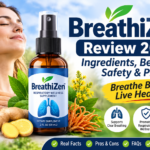
The oral dietary supplement’s label identifies mullein leaf extract, ginger root extract and organic lemon extract. The disclosure also specifies serving size, directions and the total blend weight while leaving individual ingredient quantities undisclosed. LAKELAND, Fla. — BreathiZen has disclosed the formulation and Supplement Facts panel of its botanical oral spray, identifying three plant-derived ingredients […]
The oral dietary supplement’s label identifies mullein leaf extract, ginger root extract and organic lemon extract. The disclosure also specifies serving size, directions and the total blend weight while leaving individual ingredient quantities undisclosed.
LAKELAND, Fla. — BreathiZen has disclosed the formulation and Supplement Facts panel of its botanical oral spray, identifying three plant-derived ingredients in a 154 mg proprietary blend per serving. The label lists mullein (Verbascum thapsus) leaf extract 10:1, ginger (Zingiber officinale) root extract and organic lemon extract.
The disclosure provides consumers with the product’s serving size, number of servings, ingredient names and other formulation details. It also makes clear that the label reports the combined weight of the proprietary blend rather than separate quantities for each botanical ingredient.
According to the product label, one serving consists of four sprays, equivalent to 0.60 mL. The 60 mL bottle lists 100 servings per container. The suggested-use instructions state that consumers should shake the bottle before use and spray four pumps directly into the mouth or onto the tongue once daily.
The label identifies GEX Corp, Lakeland, Florida, as the distributor. It also states that the product is made in the United States with globally sourced ingredients.
What the BreathiZen Supplement Facts Label Discloses
BreathiZen lists a total of 154 mg for its three-ingredient proprietary blend per 0.60 mL serving. The label does not provide an individual milligram amount for mullein, ginger or lemon.
The three ingredients appear in this order:
-
Mullein (Verbascum thapsus) leaf extract 10:1
-
Ginger (Zingiber officinale) root extract
-
Organic lemon extract
The label separately identifies purified water, glycerin, natural flavors, citric acid, potassium sorbate and sodium benzoate as other ingredients.
The distinction between the total blend weight and the amount of each botanical is important. A consumer can identify the combined quantity and the listed ingredients, but cannot determine the exact amount of each extract from the label alone.
The U.S. Food and Drug Administration’s dietary supplement labeling guidance explains that proprietary blends are identified by their total weight, while the dietary ingredients within the blend are listed in descending order of predominance by weight, subject to applicable labeling requirements. This is a labeling format; it does not establish that a formula is clinically effective.
Official Website: Breathizen Official Website
Why Individual Ingredient Quantities Matter
A total blend amount does not tell consumers how much of each ingredient they receive in a serving. That information can matter when comparing a supplement label with published research, because scientific studies generally identify the ingredient, preparation and quantity used.
For BreathiZen, the 154 mg figure applies to the combined proprietary blend. It should not be interpreted as 154 mg of mullein, 154 mg of ginger or 154 mg of lemon.
The label also identifies mullein as a 10:1 extract. That description indicates an extract ratio, but it does not disclose the finished extract’s individual weight in the serving. Without ingredient-specific quantities and further details about the extracts, a direct comparison with research preparations is limited.
This distinction is particularly relevant when studies use teas, whole plant material, isolated compounds or extracts prepared differently from those listed on a commercial supplement label.
What Research Says About Mullein Leaf
Mullein, scientifically known as Verbascum thapsus, is a flowering plant with a history of traditional use. Its leaves and flowers have appeared in herbal preparations, including products traditionally associated with throat and respiratory comfort.
A 2022 review published in Phytotherapy Research examined the plant’s traditional uses, chemical constituents and findings from experimental research. The authors discussed several biological activities reported in laboratory and other preclinical investigations.
However, a review of traditional uses and experimental findings is not the same as a clinical trial demonstrating that a particular mullein preparation improves respiratory health in people.
The distinction also matters because research may examine different parts of the plant. BreathiZen’s label specifically identifies mullein leaf extract, not flower extract. Evidence involving another plant part or a different preparation cannot automatically be applied to the ingredient in this product.
The published review therefore provides scientific background about Verbascum thapsus, but it does not establish that BreathiZen’s mullein extract has been clinically tested or that the finished product treats respiratory conditions.
Research reference: Gupta et al., “Health-promoting and disease-mitigating potential of Verbascum thapsus L. (common mullein): A review,” Phytotherapy Research, 2022. PubMed.
Ginger Root: Existing Research and Its Limits
Ginger, or Zingiber officinale, is a widely used food ingredient and botanical that has also been investigated in human research. Its underground stem, commonly called the rhizome, contains naturally occurring compounds, including gingerols.
The National Center for Complementary and Integrative Health (NCCIH) reports that ginger has been studied for several health-related uses. Research has examined areas such as nausea and vomiting, menstrual cramps and symptoms associated with knee osteoarthritis.
The strength of evidence differs by condition. NCCIH notes that some studies have limitations and that findings for one use should not be generalized to unrelated health outcomes.
Although ginger has a history of traditional use for respiratory complaints, the existence of research on ginger does not establish that the ingredient improves breathing or lung function when included in BreathiZen.
The product label also does not disclose the amount of ginger extract in each serving. That makes it difficult to compare the product’s ginger content with the quantities used in individual research studies.
Consumers who use medication should discuss herbal supplements with a qualified healthcare professional. NCCIH notes that herbs and medicines can interact, and ginger may cause side effects such as abdominal discomfort, heartburn, diarrhea or irritation of the mouth and throat.
Organic Lemon Extract: What Can Be Established
The third listed ingredient is organic lemon extract. Lemon comes from Citrus limon, a citrus fruit used in foods, beverages and botanical preparations.
Lemons contain naturally occurring plant compounds, including flavonoids and other citrus constituents. Their composition can vary according to the plant material, extraction method and processing conditions.
The BreathiZen label, however, does not identify a specific lemon compound, standardization level or individual extract quantity. It also does not state a vitamin C amount in the Supplement Facts panel.
For that reason, the presence of organic lemon extract should not be interpreted as proof that the product supplies a particular amount of vitamin C or delivers a defined respiratory benefit.
Research on citrus fruits or isolated citrus compounds may provide background on their composition and biological properties. Such research does not establish the effectiveness of this particular extract in BreathiZen.
The ingredient-specific quantity and extract specifications would be needed for a more precise comparison with published studies.
See Detailed View of Ingredients Here
Product Format, Serving Size and Directions
BreathiZen is labeled as a liquid dietary supplement in an oral spray format. Its instructions specify four sprays directly into the mouth or onto the tongue once daily.
The serving size is 0.60 mL, and the bottle contains 60 mL, with 100 servings stated on the label.
The directions also say to shake the bottle before each use and not to exceed the recommended dose. The product is intended to be taken orally; the label does not describe it as an inhaler or a nasal spray.
The label lists purified water and glycerin among the other ingredients, along with natural flavors, citric acid, potassium sorbate and sodium benzoate. These are separate from the three botanical ingredients included in the proprietary blend.
Consumers should follow the directions printed on the bottle rather than increasing the number of sprays based on personal expectations.
What the Label Does Not Establish About Clinical Testing
The Supplement Facts panel identifies the ingredients and total blend weight, but it does not provide evidence that the finished BreathiZen formula has undergone a controlled clinical trial.
Research involving mullein, ginger or lemon individually cannot be treated as a clinical test of the combined product. Differences in ingredient quantities, extraction methods, formulation and study design can affect whether findings are relevant.
No finished-product clinical trial details, such as a study protocol, participant number, control group or published results, are provided on the label supplied for this announcement.
A clear distinction between ingredient research and finished-product testing is important for consumers evaluating dietary supplements. It prevents preliminary or unrelated research from being presented as proof of a product-specific outcome.
A separate example of ingredient-level disclosure and research limitations can be found in VapoCept’s six-ingredient formula review examining the evidence behind cognitive supplements, which discusses how findings on individual ingredients differ from clinical evidence on a finished supplement.
A Product Formulator’s Perspective on Ingredient Disclosure
“Formulating a botanical supplement requires more than selecting ingredients with a history of traditional use. The identity of each plant, the part used, the extraction method and the amount included all matter when evaluating a finished formula. A combined blend weight gives consumers one piece of information, but ingredient-specific quantities and supporting documentation provide a clearer basis for comparing a formulation with published research.”
Lara Johns, Product Formulator , BreathiZen
Explore Breathizen and Its Official Product Information
Dietary Supplement Labeling and Consumer Information
Dietary supplements are regulated differently from prescription medicines. The FDA does not approve dietary supplements for safety and effectiveness before they are marketed.
Manufacturers and distributors are responsible for ensuring that their products comply with applicable requirements, including rules concerning product safety, labeling and claims. The FDA also advises consumers to read supplement labels and consult healthcare professionals when deciding whether a product is appropriate for them.
BreathiZen’s label carries the standard statement that its claims have not been evaluated by the FDA and that the product is not intended to diagnose, treat, cure or prevent any disease.
The label also states that pregnant or nursing mothers, children under 18 and individuals with a known medical condition should consult a physician before using the product. It advises consumers not to exceed the recommended dose and not to use the bottle if its safety seal is damaged or missing.
These cautions are relevant when assessing any dietary supplement, particularly for people who take medication or have an existing medical condition.
Frequently Asked Questions About BreathiZen
What is BreathiZen?
BreathiZen is a liquid dietary supplement in an oral spray format. Its label identifies a 154 mg proprietary blend containing mullein leaf extract, ginger root extract and organic lemon extract per serving.
What are the ingredients in BreathiZen?
The three ingredients listed in its proprietary blend are Verbascum thapsus leaf extract 10:1, Zingiber officinale root extract and organic lemon extract. Other ingredients include purified water, glycerin, natural flavors, citric acid, potassium sorbate and sodium benzoate.
How much of each ingredient does BreathiZen contain?
The label does not disclose individual milligram quantities. It lists only the combined proprietary blend weight of 154 mg per serving.
What is the serving size?
One serving is four sprays, equivalent to 0.60 mL. The label states that a 60 mL bottle contains 100 servings.
How is BreathiZen used?
The label instructs consumers to shake the bottle and spray four pumps directly into the mouth or onto the tongue once daily. It also says not to exceed the recommended dose.
Is BreathiZen an inhaler?
No. The product is labeled as an oral dietary supplement. Its directions specify spraying the liquid into the mouth or onto the tongue, not inhaling it.
Does BreathiZen contain mullein?
Yes. The Supplement Facts panel lists mullein (Verbascum thapsus) leaf extract with a 10:1 extract description as the first ingredient in the proprietary blend.
What does the 10:1 mullein extract description mean?
It describes an extract ratio. It does not reveal the exact milligram amount of mullein extract in one serving, which is not separately disclosed on the label.
Does ginger have scientific research behind it?
Yes. Ginger has been studied in human research for several uses, including nausea and some other conditions. The strength of evidence varies, and research on ginger for one condition does not establish a respiratory benefit for BreathiZen.
Has the finished BreathiZen formula been clinically tested?
The supplied product label does not identify a clinical trial of the finished formula. Research on individual ingredients should not be described as clinical proof for the combined product.
Is BreathiZen FDA-approved?
The label does not establish FDA approval. The FDA does not approve dietary supplements for safety and effectiveness before they are marketed.
Who should consult a physician before using BreathiZen?
The label specifically advises pregnant or nursing mothers, children under 18 and people with a known medical condition to consult a physician before use. People taking medication should also discuss herbal supplements with a healthcare professional.
Who distributes BreathiZen?
The supplied label identifies GEX Corp, Lakeland, Florida, as the distributor.
Curious about Breathizen’s ingredient combination? Explore more.
About BreathiZen
BreathiZen is identified on its product label as a dietary supplement in a 60 mL oral spray format. The label lists a three-ingredient botanical proprietary blend containing mullein leaf extract, ginger root extract and organic lemon extract, with a total blend weight of 154 mg per serving. GEX Corp, Lakeland, Florida, is named as the distributor.
Media Contact
Company: GEX Corp
Location: Lakeland, FL 33804, USA
Email: contact@customercs.com
Phone: +1 323-372-9581
Official Website: Breathizen.com


