
Newburyport Leather Hardware Supplier
Newburyport, United States – July 21, 2026 / Buckle Guy /
Buckleguy Highlights Hardware for Leather Goods as a Design Decision
UNITED STATES — JULY 2026 — Buckleguy is placing emphasis on the practical role of hardware for leather goods, encouraging makers, leatherworkers and leather goods businesses to treat buckles, rivets, snaps and D-rings as core design decisions rather than end-of-project add-ons.
In leathercraft, attention often goes first to the hide, the cut, the stitching, the edge work and the finish. Those choices deserve their time at the bench, but the smaller metal parts quietly decide much of what happens once a finished piece enters daily use. A strap must adjust cleanly. A flap must open without a fight. A bag must carry weight through reliable connection points. A leash, belt, pouch or utility piece must fasten, move and feel right in the hand.
That is where leathercraft hardware becomes more than decoration. Buckleguy, a Newburyport-based supplier and producer serving leatherworkers, artisans, manufacturers and leather goods businesses, is using its product education focus to bring those decisions forward in the maker process. The company supplies hardware, leather, tools, waxed canvas, kits and patterns, RIRI zippers, workshop supplies and related leathercraft materials, with hardware remaining one of its central product areas.
Small Parts Carry a Lot of Design Responsibility
A piece of leather hardware may be small enough to fit between two fingers, but its job is rarely small. Buckles control adjustability and closure. Rivets reinforce connection points. Snaps allow a product to open and close repeatedly. D-rings, O-rings, loops and sliders help straps attach, shift, tension or move. In a finished product, these parts become the mechanics of the design.
For a maker, that means hardware selection should happen early enough to influence the pattern and build. Hole placement, strap width, leather weight, reinforcement, fold allowances and edge finishing can all depend on the part being installed. A buckle with the wrong frame size can make a strap feel cramped or sloppy. A snap placed without enough support can pull against the leather in an awkward way. A rivet that does not suit the material stack can affect how secure and polished the connection feels.
Buckleguy’s emphasis on product-aware education reflects a simple maker reality: hardware is part of the structure. The company’s solid brass hardware options, for example, matter not only because of appearance, but because material, finish, weight and use case all affect how a finished leather good behaves over time. Brass is often discussed in maker and manufacturing contexts because of its working characteristics, and practical considerations such as brass metallurgy and corrosion resistance can matter when selecting components for goods that will be handled frequently.
The point is not that one piece of hardware fits every project. It is that each part has a job. A leather tote, camera strap, dog collar, wallet chain attachment, belt, backpack strap or small accessory may ask something different from its hardware. Some pieces need smooth movement. Others need low-profile fastening. Some need a firm hold at a stress point. Others need a finish that visually works with the leather and thread without distracting from the form.
Buckles, Rivets, Snaps and D-Rings Shape Everyday Use
Buckles tend to be one of the most visible hardware decisions. They create adjustability, but they also influence scale, balance and handling. A belt buckle must sit comfortably and hold a strap through repeated use. A bag buckle may need to look proportional while remaining practical to open and close. A maker’s buckle selection can therefore affect both the technical build and the final character of the piece.

Rivets perform a different kind of work. They are small fastening components, but they often sit at points where the leather is folded, layered or asked to carry tension. For leatherworkers and small manufacturers, rivets for leather goods are not just visual dots on the surface. They can support a strap end, reinforce a handle tab or help secure a functional assembly where stitching alone is not the chosen method.
Snaps bring the familiar satisfaction of a clean open-and-close action. They are common in bags, accessories, cases, straps and utility pieces where quick access matters. Bolt snaps and swivel snaps also bring movement into the design, especially where straps, clips or detachable components are involved. Buckleguy’s bolt snaps collection sits within this leathercraft context, where the part must connect to leather goods and related hardware rather than being treated as a generic clip.
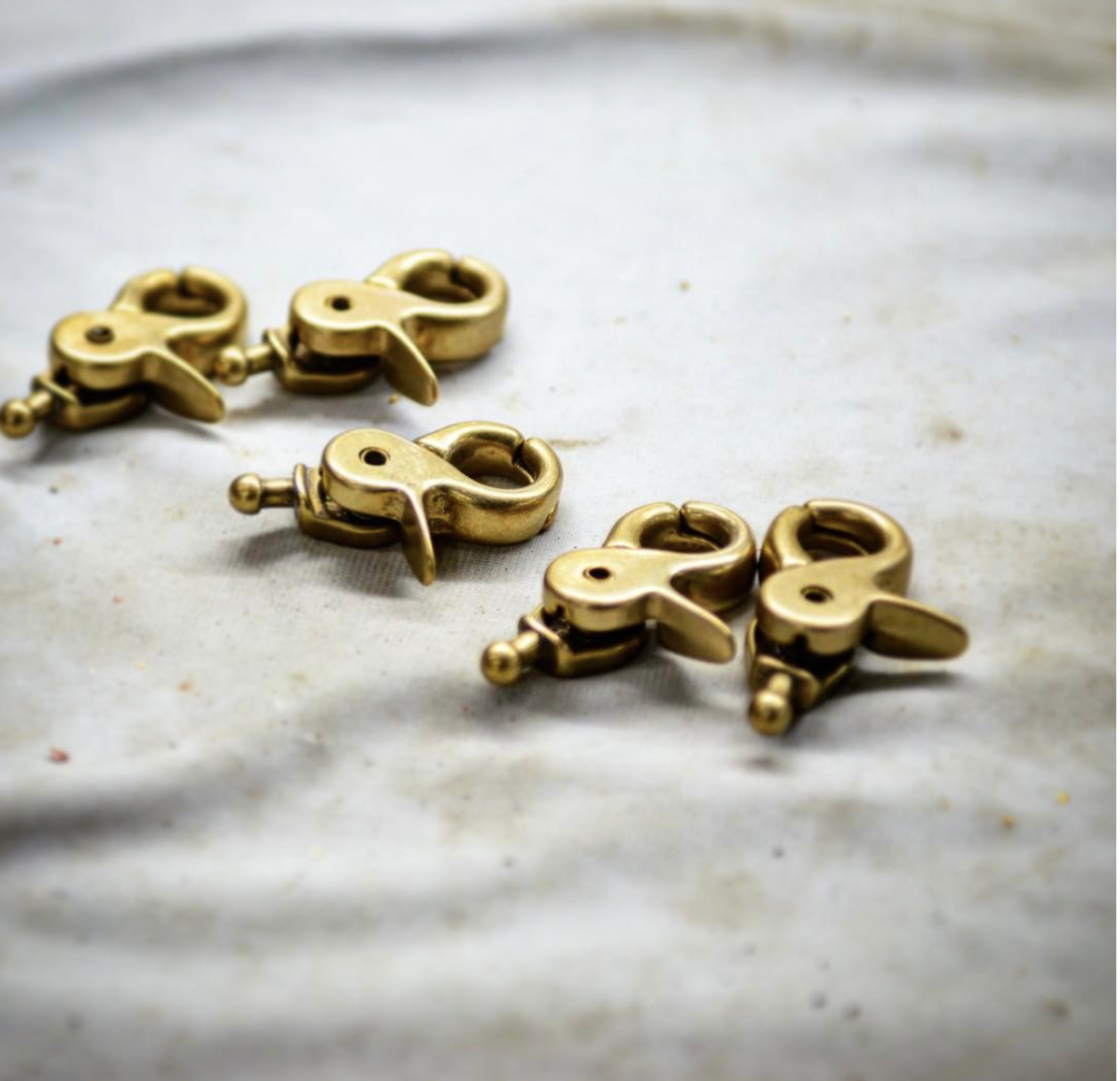
D-rings and related rings may appear simple, but they often determine how a strap changes direction, how a handle attaches or how weight moves through a product. On a bag, the placement and scale of a ring can affect how the bag hangs from the shoulder. On pet products, utility gear or straps, the hardware must align with the leather construction and intended motion. For makers, the lesson is less about adding metal and more about designing connection points that feel intentional.
Hardware Choices Start Before Assembly
Buckleguy’s educational approach encourages makers to think about hardware before the final bench session. A finished leather good is a system of materials. Leather thickness, temper, stitch pattern, hole spacing, hardware finish, strap width and the expected hand feel all interact. A maker who selects hardware only after cutting the leather may have fewer options for proportion, reinforcement or attachment style.
The practical questions are often straightforward. What needs to open? What needs to stay closed? Where will the user pull, lift or carry the piece? Which connection points will see the most movement? Will the hardware rub against leather, fabric, clothing or another metal component? Does the finish need to coordinate with other parts on the same item? These questions help makers move from a parts list to a product decision.
Finish selection also affects the final impression of leather goods hardware. A bright finish can become a design feature, while darker or more subdued finishes may support a quieter build. Matching every component is not always required, but inconsistency can be noticeable when a piece includes multiple buckles, snaps, sliders, loops or rivets. Buckleguy’s range of hardware finishes and options gives makers a way to think through those visual and functional combinations within the build.
There is also a tactile side to the decision. A closure can look appropriate and still feel awkward if the user has to fight it. A heavy component can make a small item feel unbalanced. A thin or undersized component can make a larger piece feel underbuilt. The more effective hardware choice for a project is often the one that supports the product’s intended rhythm: opening, closing, carrying, adjusting, clipping, releasing and repeating those actions without calling too much attention to itself.
A More Practical Conversation Around Leather Hardware for Makers
The company’s position is rooted in a broader educational role rather than a promotional claim about a single part or category. For leatherworkers and leather goods businesses, better product decisions come from understanding the job each material performs. Leather provides the body, texture and character. Thread and stitching help define construction. Tools shape accuracy and repeatability. Hardware adds motion, fastening, attachment and load-bearing points that the finished item depends on.
That perspective is especially useful for makers moving from one-off projects into repeatable production. A hobbyist may choose a buckle or snap mainly by appearance, while a small leather goods business may also need to consider consistency across batches, finish coordination, ease of installation and how the product feels after repeated use. Manufacturers may need component choices that work within defined construction methods and product specifications. Across those settings, the hardware decision remains practical, not merely decorative.
By highlighting hardware for leather goods as a design and construction topic, Buckleguy is reinforcing a useful maker habit: deciding how a product should behave before deciding which part looks good on it. A strap that slides smoothly, a snap that closes with confidence, a rivet that supports the material stack and a D-ring that sits at the right angle can each improve the finished experience in small but meaningful ways.
About Buckleguy
Buckleguy is a Newburyport-based supplier and producer serving leatherworkers, artisans, manufacturers and leather goods businesses. The company supplies leathercraft materials including hardware, leather, tools, waxed canvas, kits and patterns, RIRI zippers, workshop supplies and related products. Its product focus includes leather goods hardware such as buckles, rivets, snaps, D-rings and other components used in bags, straps, belts, accessories, pet products, utility gear and related leather goods.
As makers continue refining materials, construction and finish decisions, Buckleguy’s message is deliberately practical: the small parts deserve a place at the design table. Hardware may be measured in fractions of an inch, but in the life of a finished leather good, it can decide how the piece fastens, moves, carries and feels every day.
Media Information
Client Name: Buckleguy
Website: buckleguy.com
Telephone: (978) 213-9989


Contact Information:
Buckle Guy
15 Graf Road
Newburyport, MA 01950
United States
Hugh Harriss
(978) 213-9989
https://www.buckleguy.com/


